Tuesday, September 27, 2022

Tiksay fishing in the Philippines


A Tiksay fishing rig is a modified air rifle used as a fishing gun. The dart is inserted into the barrel of the air rifle and set by a ramrod . There is a fishing line tied to the dart to retrieve it and the fish. This type of fishing is called "Tunod" in Laguna and "Tiksay" in other places.

Tiksay fishing requires shooting skills to master. Due to water refraction the fish appears to be seen higher than in a normal line of sight. A good rule to remember is to aim low. I have made a few rigs in the Philippines and fished with them to great success, sometimes even darting 2 fish at once.

The majority of the rifles I and my associates made into Tiksay rigs were of the pump variety. Usually the Eskopeta brand air rifle ( http://eskopetaairguns.com/ ) that is cheap and popular in the Philippines. But, I have seen them made from just about any type of old air rifle , even a break action. I believe there is even a gentleman making rifles now specifically for Tiksay fishing.

The caliber is always .22 and the makers of these rigs prefer older guns to be used solely for Tiksay fishing. The waster is hard on the guns and the darts tend to scratch the rifling and make them ineffective for hunting birds etc. The darts are made from many different materials. I have seen them made from motorcycle spoke, ball point pen barrels and even old tooth brushes. it all depends on the makers.

Im not sure where or when this type of fishing originated but back in the early 2000s I remember seeing some men using this method of fishing in Indonesia. It speaks of SE Asian and Filipino ingenuity and resourcefulness. All said, this type of fishing is an excellent skill to master and is a lot of fun. I would recommend a Tiksay rig for the survival prepper and adventure hunter.

Tomahawk out!

Monday, September 26, 2022

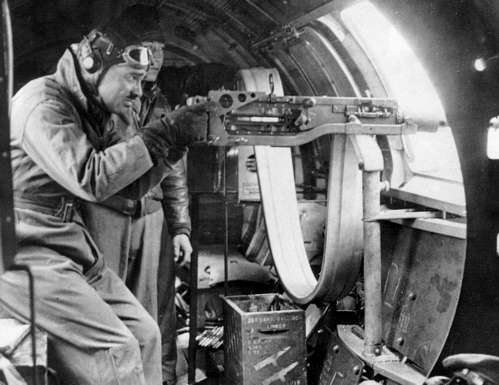
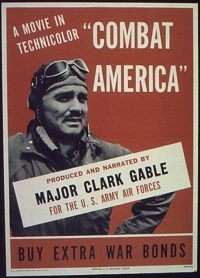
Clark Gable – WWII B-17 Aerial Gunner


Clark Gable – WWII B-17 Aerial Gunner

William Clark Gable (1901-1960) was born to a protestant father working as an oil well driller and a catholic mother who died when he was 10 months old. As a young man, he worked at oil fields and as a horse manager until he gradually broke into the world of theater and screen acting. By the time of America’s entry into World War II he was already a highly acclaimed actor and the star of such movies as It Happened One Night (which earned him an Academy Award), Mutiny on the Bounty and, of course, Gone With the Wind.

Clark Gable and his third wife, Carole LombardIn 1939, he married actress Carole Lombard, his third wife. The following years were the happiest in Gable’s life, but the idyll was cut short by tragedy. On January 16, 1942, Lombard was flying home from a war bond promotion tour when her plane crashed, killing everyone on board. Gable was emotionally and physically shattered, losing 20 pounds in a month. He enlisted in the U.S. Army later that year, almost certainly as a way to cope with the personal loss. Before her death, Lombard encouraged him to do so. After a public announcement of his intention, Commanding General of the USAAF Henry “Hap” Arnold offered him a special assignment in aerial gunnery.

Clark Gable - WWII B-17 Aerial Gunner - LT Clark GableGable, already 41 years old, considered enrolling in officer candidate school, but eventually enlisted in August 1942 as a gunner on a bomber. His studio, MGM, arranged for Andrew McIntyre, a cinematographer and personal friend, to accompany him during training. Once enlisted, he was sent to officer training anyway. He was commissioned as a 2nd lieutenant and was as the graduation speaker of his class. It was after his commission that General Arnold explained the nature of his special assignment. The USAAF was facing a shortage of aerial gunners and he wanted Gable to shoot a propaganda film to increase enlistment rates.

Gable was promoted to captain and sent to England with the 351st Bomb Group of the 8th USAAF as head of a six-man film crew. He took his duties seriously and shot a wealth of material interviewing air crew members. He was also willing to party when appropriate and became popular with the enlisted men. In order to acquire aerial footage, he also went on combat missions on several B-17 Flying Fortresses (he was attached to the group, but not to any specific crew). Official papers record five missions flown by him as an observer-gunner, though some veterans who served with him claimed he went on more.

Of the five recorded flights, one, an attack on a chemical plant in Norway, was the longest mission flown by the 8th Air Force up to that point. Another, a large raid on Germany’s industrial Ruhr Valley, was the 8th’s most dangerous flight to date, with 25 planes out of 330 shot down by the enemy. During an attack on his plane, Gable was wedged behind the gunner in the cramped top turret, shooting footage of German planes making five passes at the bomber formation. As he was handling his camera, a 20mm shell penetrated the bomber from below. Gable and the gunner dodged death: the shell cut off the heel of Gable’s boot, flew past him and exited the plane a foot from his head, all without exploding. When later pressed by reporters, Gable said he didn’t even notice the shell at the time and only saw the exit hole later.

Clark Gable WW2 Gunner with .50 Caliber Machine GunGable probably didn’t know that his actions over Europe earned him the attention of an unlikely fan: Adolf Hitler himself. He was Hitler’s favorite actor, probably in part due to his Rhinelander and Bavarian ancestry and the Führer offered a significant bounty to whoever captured the actor unscathed.

Combat America WW2 Aerial Combat DocumentaryIn November, Gable returned to America with 50,000 feet of film, ready to go into the editing room, only to find that the gunner shortage had already been rectified. Nevertheless, he was allowed to finish the 62-minute film and Combat America premiered in movie theaters in 1945.

In 1944 Gable was promoted to major. He wanted to fly more combat missions but was not assigned to any combat units during the invasion of Normandy. Realizing he wasn’t going to be allowed on missions any more due to his age, he requested his relief from active duty, which was granted. By coincidence, his discharge papers were signed by a later U.S. President: then-Captain Ronald Reagan. Shortly after his retirement from military service, he put his personal experience to good use in Command Decision, a 1948 film about the politics of and the emotional toll on commanders, in which he played a fictional brigadier general supervising raids on Germany.

Take a look at these other WWII Posts:


Thursday, September 22, 2022

When Ted Moore and Glenn Woods Shot Down A Biplane From A Huey Helicopter in Laos


https://www.warhistoryonline.com/instant-articles/an-aerial-combat-first.html?chrome=1

The year was 1968. And Operation Thunder – the aerial bombing of military targets in North Vietnam – was in full swing. These bombing raids were having a crippling effect on the North Vietnamese war effort, and the North Vietnamese Army commanders decided it was time to do something about it.

The target of the North Vietnamese strike was Lima Site 85 on the border between Laos and North Vietnam. This site was situated on top of a 5,800-foot karst mountain jutting out of the jungle. Because of its sheer cliffsides the site was accessible only by aircraft, or by foot up a steep single-file, winding trail on the mountainside.

Captain Ted Moore and crewchief Glen Woods were inbound to site 85 in their unarmed Air America Huey helicopter to bring ammunition supplies to the site. They could hardly believe their eyes when they saw the biplane attacking Site 85.  Moore stating that it “looked like something out of World War One.”

Realizing that his chopper was faster than the AN-2s, Moore decided to give chase, and Woods got his AK-47 ready for combat. It didn’t take too long for the Huey to catch up to the slow, unwieldy biplanes, and soon it was in striking distance of the rearmost AN-2.

Because the rearward visibility of the AN-2 is severely limited, the pilot of the biplane didn’t realize the Huey was upon him until it was far too late. The downwash from the chopper caused the upper wing of the biplane to stall out, and it began to drop. In desperation, the pilot tried to lower his speed – but there was no getting out of this, because the Americans weren’t quite done with the attack.

As Moore pulled in closer to the floundering biplane, Woods leaned out of the helicopter and emptied his AK-47 into the cockpit, wounding or killing both the pilot and the copilot. That was that;

One of the planes caught fire and crashed into the jungle below. The other flew beneath the helicopter and slammed into a mountainside, Moore said. Americans salvaged electronics from one of the crashed planes. "They reverse-engineered the stuff, and that allowed American planes to know when the MIGs were headed in for an attack," Moore said. "That saved a lot of American air crews. I think that's the best thing that happened." 

The Huey veered back toward Laos, and the other biplanes escaped into North Vietnam. This strange aerial victory would prove to be unique in the history of aerial combat – it was the first and only time a helicopter had taken out a biplane. It was also the first recorded air-to-air victory for Air America.

Ted Moore also helped rescue thousands of civilians in Laos in March 1968, picked up downed American pilots and delivered and picked up CIA teams that were infiltrating positions along the Laos-Vietnam border. 


The Army MC-6 parachute

I really like the look and apparent maunuverability of the new Army MC-6 parachute. In comparison to the T-10 and MC1-1B that we had during my time in service it a cadillac compared to a VW bug.

I dont have a lot of jumps compared to other Airborne types , maybe 100ish but I would probably jump this 'chute now, even at my age , if given the opportunity.

Anyway, enjoy.

More info at this link - 


Short Take-off and Landing Obio - Pilatus Porter PC6

Pilatus Porter - my brothers favorite plane


My oldest brother who flew missions in SE Asia for Air America and a couple of other "Fly by night" companies had 2 aircraft he favored. He loved to fly the C7A Caribou (My favorite for jumping and dropping "Kicking" cargo) but his #1 favorite was The Pilatus  Porter. I have to admit, I love this aircraft also.

 If you ever get bored and watch the movie "Air America" you can see many scenes with the Porter. It is a single-engined short take off and landing (STOL) utility plane designed by Pilatus Aircraft of Switzerland. First flown in 1959, the PC-6 was produced at Pilatus Flugzeugwerke in Stans, Switzerland. It has been built in both piston engine- and turboprop-powered versions, and was produced under licence for a time by Fairchild Hiller in the United States. After around 600 deliveries in six decades, Pilatus announced the end of production in 2017.

The Pilatus PC-6 Porter is a Short Takeoff and Landing (STOL) utility aircraft. The majority of aircraft are powered by a single Pratt & Whitney Canada PT6A turboprop engine, which drives a fully reversible, constant-speed, three-bladed HC-B3TN-3D (or an alternative four-bladed HC-D4N-3P unit) Hartzell aluminium propeller via a reduction gearbox. Pilatus claims that it possesses unique STOL capabilities, capable of landing in places only otherwise accessible by rotorcraft. It is fully capable of being operated from unprepared rough airstrips, in remote areas, hot climates and at high altitudes in all-weather conditions. In particular, the undercarriage employed provides for high wing and propeller clearance For further landing versatility, various types of landing gear may be optionally installed allowing it to operate from different types of terrain; options include floats for water landings and skis for landing on snow.

Wednesday, September 21, 2022

Smokejumpers CIA Clandestine Weapon in Americas Secret Wars


Up until 1980 I never knew what a smoke jumper was. When most of my military friends were heading to Rhodesia, I began working o an aviation contract based out of Thailand. I got the job through some connections my oldest brother and cousin had after they had both worked for Air America in Laos. Anyway, on the contract were several BLM and USFS smokejumpers, and a few parachute riggers from the Laos and Thai army. I myself was a qualified paratrooper, Pathfinder and helicopter sling load specialist. My overall specialty was landing zone(LZ), Pick up zone (PZ) operations - Basically all Army pathfinder operations. If you don't know what an Army pathfinder is give it a google. As a result of working on this contract I met the "Smokies" and learned about them. I had considered becoming a smoke jumper but the waiting list was years long and the other requirements were difficult and required the time I didn't care to spend. 

Myself and the "Smokies" in addition to the Thai and Laotian Riggers, Trained people in Parachuting, rigged heavy drop pallets, dropped loads and generally had a good time. It was hard work but the adventure of it made up for that. And, of course , I was young and strong so the hard work didn't bother me. I stayed in SE Asia for 4 years, then moved on to contracts in Central America, and Colombia doing basically the same thing. I laid low in the contract world for several years until 911, then embarked on another 11 years "Down range" as a military contractor (PMC) working mainly in weapons maintenance, Armed security and Aviation life support.

Tomahawk - out!

Eugene H. Hasenfus - Nicaragua


https://www.pbs.org/video/wpt-documentaries-eugene-hasenfus-story/

Eugene H. Hasenfus (born January 22, 1941) is a former United States Marine who helped fly weapons shipments on behalf of the U.S. government to the right wing rebel Contras in Nicaragua. The sole survivor after his plane was shot down by the Nicaraguan government in 1986, he was sentenced to 30 years in prison for terrorism and other charges, but pardoned and released the same year. The statements of admission he made to the Sandinista government resulted in a controversy in the U.S. government, after the Reagan administration denied any connection to him.

I remember back in 1986 when I was serving as a military contractor, hearing about Hasenfus. I didnt know the guyand neither do i remember his name or seeing him around the base in El Salvador, but all these years later I find it interesting that we were basically serving in the same "Unit" and doing the same job. I guess that can be said of most if not all of the contracts I have done since late 1979.

If you read about Eugene and look at the pictures, it is cool to note that he is dressed in a "Grey man Uniform" i.e., civilian clothing and not the mufti that is common with contractors now a days. It also interesting that when captured he was sleeping in a hammock he made from his parachute, obviously a skill he learned at  JOTC in Panama or JEST in the Philippines. Either way his application of acquired skills are what saved his life - Grey man attire, survival skills and parachuting.

Tomahawk, Out!

Sunday, September 18, 2022

LONGINES CHRONOSCOPE WITH RICHARD E. BYRD

OPERATION HIGHJUMP

A curious portrait that was exhibited inside the UN building


 A curious portrait that was exhibited inside the UN building

There, the real shape of our land was observed, perhaps with some omissions about other lands that exist behind the ice walls of Antarctica. But the evil elite that enslaves the countries of the West knows the truth of our history and hides it from the world.

In this portrait we see some round tokens around our continents which symbolize the enormous military and weapons deployment around our land to prevent the population from crossing Antarctica and learn the truth about the ancient Gods who inhabited our continents and built the architectural wonders and technological that are still standing and about the mysteries about UFOs and extraterrestrial Beings

Open your mind ...

ADHOC SURVIVAL GEAR

ADHOC (Improvised) SURVIVAL GEAR 

Recently, I was talking to my good friend Jamie Burleigh AKA  the "Bow Guy" about things you can use in the wilderness, that most folks would not recognize as survival gear.

We came up with a pretty good list of things that we have both used in the wilds that would normally be passed up, but can be used “When all else fails” as my friend Jamie put it.

Most folks , and the so called “Survival experts” you see on TV or youtube are very gear oriented. I seriously doubt that many of them – if any, could survive in the wilds without ample gear or supplies. That is not “survival” or skill, that’s just camping. Anyone can do that.

What we discussed were things like lipstick or chap stick that could be used like Vaseline to help get a fire going, or simple things like a needle and thread made from Agave or yucca, or pain killer made from willow etc. Making arrow heads from flat ware spoons, or constructing a quickie slingshot from dumpster dived materials.

“WHEN ALL ELSE FAILS” gear list by Tomahawk and Jamie Burleigh from  SeekingSelfReliance.com

1.“Cheater reading glasses” for fire making.

2.Tuna or any type of pull top can – cooking pot, lid can be a knife or tool, signaling device etc. you can also open a non pull top tuna can with out an opener, by abrading it on a rock.

3.Frayed shoe lace to catch a spark from flint rocks or ferro rod.

4.Burlap bag, rain jacket, insulation layer, unraveled to make a cord for fire making or traps etc.

5.Frayed plastic bailing twine – short hanks, would need to be twisted back into a long cord.

6.Empty glass bottle or jar – canteen, or broken to make tools.

7.Empty pop can and a Hershey bar or tooth paste , to make a parabolic dish for fire making. the chocolate or tooth paste is mildly abrasive and will polish the can bottom to a high shine that will start a fire, via the parabolic tech.

8.Reflector cone from a flash light, can be used as a parabolic dish to make fire or as a signal mirror.

9.Steel wool and a battery can be used to make fire.

10.Bandana, filter for water, tourniquet, bandage, skeeter deterrent, head cover, many other uses.

11.Metal nail file, striker for flint and steel fire, or abrading tool  to make weapons.

12.Broken hack saw blade, can be easily sharpened to make a knife, or used as a striker for flint and steel fires.

13.Torn plastic, can be twisted into rope or useable string.

The list goes on.

  • A piece of space blanket to be used as tinder for ferro rod fire making, will work even if wet.
  • Old under wear, the elastic can be used for sling shots or a Hawaiian sling.
  • Lip stick or chap stick for fuel in ferro rod or flint and steel fire making.
  • 10 or 16 penny nail , tool of many uses. can be used to knap glass into a workable arrow head or knife.
  • Old metal spoon, tool of many uses.
  • Stuffed animal , you can pull out the stuffing, twist it into a cord, can be used for many things, even made into a hat if you have sewing skills/kit.
  • Cheap whisky for fire lighting. or as a topical antiseptic.
  • Condoms for carrying water, goggle straps, cord for bow and drill fire.
  • Vaseline, works the same as chap stick and lip stick for fire starter.
  • Empty bic lighter, that has a working striker. can be used to make fire utilizing the “Prison match” technique.you need a bit of tissue paper , but natural fibers might work too.
  • Small credit card sized magnifying lens to use for fire making.
  • DvD to use as signal mirror.
  • The hologram from an old credit card can be used to signal aircraft.
  • Old socks, can be used as gloves, neck warmer, water filter, head band, tourniquet, tumpline etc.
  • Olive oil is used as a treatment for abrasions.
  • Garlic is a great natural antibiotic.
  • Wood charcoal, used as a spark catcher in percussion fire making(flint and steel).
  • Willow bark as a pain killer.
  • Old inner tube can be used as a water bladder.

Gauchos and their Knives

About a million years ago, I was into horse culture. I had worked as a ranch hand and mule skinner all over the American west and wanted to learn as much as I could from real cowboys. I even flew to Hawaii to ride with the Peneolos on the big island, They are actually the 1st American cowboys. Anyway, I flew to Argentina and wandered around a bit then spent some time living with and learning from the Gauchos about riding, roping, throwing a bolo, and working with rawhide and leather.

These cats made all of their own horse tack from a bulls hide. These hides are hard as sheet metal so they leave them lying out over night so that the dew (or rain) will soften them, then in the morning over Mate` they can cut and work them. Joe Garza can attest to the hardness of rawhide and the necessity to work it while wet.

These hombres did all the rawhide work with their knives only, simultaneously slicing off a hunk of beef from the roast over the fire, or trimming a toe nail or lancing a boil on the horses back. Always in movement, they were never idle.

More recently, I was working as a teacher in Yopal, Colombia and there, the “Gauchos” are called Yaneros (spelling incorrect), and these guys all carried a simple chefs knife in a quality sheath. I think Eric Dhabliwala has one of them I sent him.

colombian vaquero knife and sheath (2)

anyway, I found some words about Gauchos and their knives by Abel A. Domenech. Rather than me trying to write about them I will post it here for your convenience;

…Together with his horse, the knife, especially the facón or daga, was the distinctive tool/weapon of the gaucho, to the point of not himself existing without them. Gauchos were famous for the skillful use of knives and the use and abuse made of edged weapons during their duels. To understand this, we should bear in mind their background and epoch: these were solitary men. Very tough men raised in total solitude, almost without parental guidance. With no education, almost no religion, they spent their lives in the middle of the large plains in constant touch with nature, the danger of wild animals and Indians, the constant peril. They often spent long periods of time in solitude without seeing another human being and their only source of distraction or satisfying their very few extra needs was to reach one of the hundreds of pulperias distributed along the frontier.

The above excerpt to me sounds glorious.

See you on the trail!

Col Tomahawk

gaucho-sunset-silhouette-free-vector

Personal Guns

 Marlin papoose

Personal Guns

I’m not a big Fan of Guns. Even though I was an Armorer in the Army and as a Military contractor in the Middle east and Africa. I like them more for their aesthetic appeal rather than their use.

My personal gun collection was only 4 guns. I use to own many more but never used them. I have either sold the extra ones or traded them off for more practical items like cast iron cook ware or wood working tools. And, I’m not sorry to say, I always found going to the range to shoot a little boring and not worth the effort.  Also, Going to the range conjures up nightmare memories of being in the Army and awake at 3 AM, wearing Kevlar, web gear, and gas mask then either freezing my ass off or baking in the blazing sun all day – no thank you.

Anyway, as I said I only have 4, a .22/,22 mag “rough rider” pistol. A marlin “Papoose” take down rifle, a 20/.22 Savage break action shot gun, and a Chinese pellet rifle. I had a 50 cal Black Powder “White mountain” hunter but sold it recently.

The guns I have would provide for me If I ever need to count on them for Survival hunting/ foraging purposes. A .22 rifle and a brick of 500 bullets is really all you need for long term survival. If I had to haul ass after some great disaster, I would grab my papoose and the rough rider. I have killed a Caribou and deer with the papoose, and the .22 magnum on the RR pistol is an awesome round. While working as a big game hunting guide in Montana back in the day, many of the old timers referred to the .22 mag as the best “Poaching” round there is.

With My 20 guage (62 cal), Simply by changing ammo type or shot weight, I can kill any big game found in North America . The ammo can be reloaded with smokeless or Black powder providing I have the caps. Or, I can reload it with some backwoods savvy taught to me by various native people in SE Asia.

The Chinese air rifle I use to keep varmints out of my garden, and if need be for hunting small game. I’m a little amused at “survival types” who hoard guns and ammo just in case they need them to fight a corrupt governments soldiers etc. You will not win a fight against Hardened troops in the event of martial law. It is stupid to think you would.

Anyway, you don’t need 50 guns and thousands of rounds of ammo to survive an economic collapse , kill the zombie hoards, or fight government troops. Just get a couple of practical guns that are easy to fix, simple to use, and come in common calibers, keep in mind that the 12 guage ,30.06, and .22 are the most common rounds in the USA.

I was attempting to fire my Marlin Papoose.22 rifle the other day only to realize that the firing pin was broken!After consulting the internet for Papoose plans and schematics, assembly/disassembly instructions my friend I called the local gun repair shop and located a Papoose firing pin for 8 dollars. I drove down to the gun shop, bought the firing pin, hit a couple of pawn shops on the way back, then bought some coffee and cinnamon rolls and I was in business.

In less than 5 minutes I installed the new firing pin, reassemble the papoose, and test fired it. Im always amazed at the information you can find on the internet.

Bear-Logo

SURVIVAL BASICS: Covering the 4 essentials of wilderness survival


SURVIVAL BASICS: Covering the 4 essentials of wilderness survival

  1. Shelter
  2. Water
  3. Fire 4 .Food

SHELTER:

When lost in the wilderness there are four things you will need to survive. When you find yourself lost in the wilderness areas of the world the first thing you need to do is stay calm, don’t wander around in a panic and get yourself more lost. Sit down, think things over, inventory your equipment and make a plan.

The 1st thing you will need to do is make a shelter, it is the #1 most important element in survival. a shelter will protect you from the elements like snow, wind, rain, heat etc. and also will help protect you from possible predators, and keep you off of the ground depending on the type of shelter you build.

If you have a tent or bivvy shelter in your gear that is perfect, but chances are you will be out with little or no gear so there are several shelter options you can choose from depending on your location.

you can look for natural shelters like rock over hangs and fallen trees etc. other options include a squirrel type shelter made of sticks and leaves, a lean to made from sticks and loose bark. Remember to insulate yourself from the ground also by covering the floor of your shelter with grass, leaves, ferns or other types of soft vegetation.

WATER:

Water is the 2nd priority you need to take care of in a survival situation. you can go for 3 days without water, in most jungle or temperate climates water can be found fairly easily, you will need to purify it most times and that can be done by boiling it if you do not have purification tabs in your personal survival kit.

Water just needs to come to a rolling boil to make it drinkable, no need to boil it 5 mins. There are also vines in the forest which will yield water if you cut them correctly. Thistle plants will also give you a refreshing bit of moisture, just scrape off the spikes and chew the stems for the moisture then spit out the pulp.

It is a fantasy that cactus will provide water; in fact most cacti are toxic to a certain extent. Avoid trying to extract moisture from cactus, it is a waste of time and energy.

You can also look for water that has collected in rock depressions and in the hollows of trees.

If in the desert look for the green indicator plants in washes and dry river beds, these patches of green will be easy to spot in the desert. if in a dry river bed look for the lowest area in the bend of the river bed and dig down until you find moist sand/dirt, dig a little deeper and see if it begins to fill with water. If you get lucky and find water in the river bed you can soak it up with a piece of cloth like a bandanna or socks then ring it out into your mouth.

Another way to get water is to walk through a dew wet field of grass and collect the water in your clothing then wring it out into a container.

FIRE:

there are numerous ways to make a fire in the outdoors, chances are you will have a lighter or matches on you when out in the woods if not, you can make a fire fairly easily with the bow and drill method of fire making

A B&D set consists of 5 components;

  1. Tinder bundle – can be made out of any combustible materials that have been softened, I like to use cotton wood cambium or juniper bark. Other materials I have made into tinder bundles include milk weed and dog bane fibers, grass, aspen cambium etc. there are countless things to be found in the outdoors that will work.

You can also add extra combustibles to your tinder bundle if you cannot find enough of one type of material; things like thistle or cattail down, birch bark, and pine pitch are excellent fillers.

  1. spindle(or Drill) – the spindle for your personal should be about as big around as your thumb and as long as your hand and should be made from a wood that can be easily dented with your thumb nail. Good types of wood in North America are Alder, cedar/juniper, sycamore, cotton wood, or willow.
  2. fire board – the board is made from the same material as the spindle and needs to be about 2 fingers wide, 1 finger thick , and about as long as your foot.
  3. Bow – your bow can be made of any type of wood you like but it needs to be from arm pit to fingertip in length. Some folks like a flexible bow with an acute bow in it but I prefer a straighter stiffer bow with no flex.
  4. Socket, (bearing block, top rock etc.) sockets can be made from deer antler, cow bone, various hard woods or stone.

FOOD:

Going without food is uncomfortable but a human can go without food for 3 weeks of more depending on their metabolism. In a short term (say 72 hour) survival situation you can easily go without eating.

it would be better to concentrate on improving your , finding water of making a fire then to waste energy on food.

But Edibles can easily be found in the summer if you know where to look.

Everything that walks, swims, flies or crawls can be eaten. If you have fishing gear in your personal survival kit you can set out trot lines or try bank fishing. Scout along the streams and look for other animals like cray fish (craw daddy’s), or fresh water mussels.

Snakes, birds, rabbits, marmots, squirrels etc. can be killed with a simple stick or club. You can throw it at the desired animal in a spinning motion to make a quick kill. The aborigines of Australia use the boomerang to the same effect. Southwestern Native Americans use a rabbit stick in a similar fashion as the boomerang.

PERSONAL SURVIVAL KIT:

Your PSK will depend on where you live and the type of wilderness environment you venture into. When putting your kit together remember the 4 essential of survival and go from there. your kit should be small enough to fit easily into a pocket or belt pouch. Some useful items in a kit should include;

Shelter: space blanket (or 2)

Water: metal cup for boiling water and water purification tabs (aqua tabs)

Fire: Lighter (or 2),or matches in a water proof container, other options include a metal match (ferrocium rod), candle, small tinder bundle of natural fibers, trioxane fuel tabs, fire ribbon or other types of commercially available tinder.

Food: hard candies are a good choice, bouillon cubes, power bars or chocolate bars, instant soup mix, coffee, tea, sugar packets, salt packets etc.

Some 1st aid items like extra strength pain killers, bandaids and a few bandages with adhesive tape are a good idea. A signal mirror, small sewing kit, fishing gear, and a whistle are also excellent choices for a personal kit

Invest in a good knife like a Swiss army knife (SAK) that has 2 cutting blades and a saw on it, avoid the heavy and difficult to use multi tools. You will find that the saw on the SAK is the best tool you can have for shelter building.

Powered By Blogger